The large black ants
Carpenter ant control around Waterbury
Carpenter ants are the ants most likely to set up a colony inside a Connecticut building. They do not eat wood, but they hollow out wood that water has already softened, so a nest usually points to a leak as well. To talk to a local company about finding the nest, call (475) 263-3625.
Recognising them
Three species nest in buildings here. The eastern black carpenter ant is the common one and among the biggest ants in New England: workers run from about a quarter inch to half an inch long. The red carpenter ant is a little smaller with a reddish-brown middle section, and a smaller black species tends to nest near window and door frames.
They are mostly active at night. The ones you see in daylight are usually scouts looking for food, so a few big ants on the kitchen counter in the afternoon can stand for a much larger number after dark.
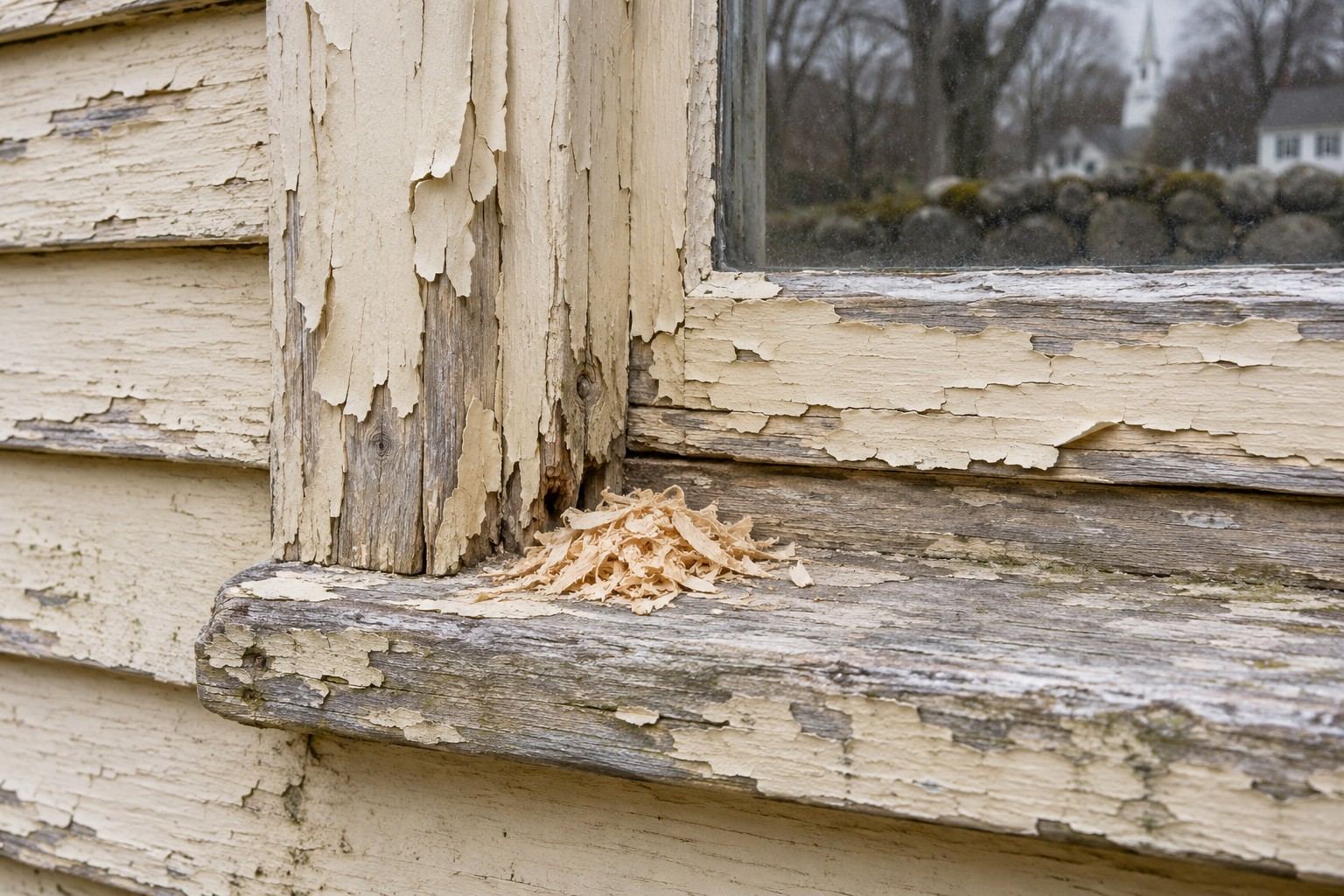
- Sawdust dumps. Small piles of coarse shavings mixed with bits of insects, pushed out below a nest: under a window sill, beside a door frame, at a porch or deck joint.
- Rustling in a wall at night. The Experiment Station lists nighttime scratching in walls or voids as a nest sign.
- Winged ants indoors from late spring into midsummer, when mature colonies send out swarmers. Termites only swarm in spring; use the wings and waist to tell them apart.
- Trails over the foundation, along railings and wires, and across tree branches that touch the roof.
Why Waterbury houses get them
Colonies live in stumps, dead limbs and old fence posts, and houses close to those outdoor nests are the ones most likely to be invaded. Workers can forage from about 65 feet up to 100 yards away, so a wooded lot or a neighbor's dead tree is close enough.
Inside, they go where wood stays damp. The Experiment Station names the places: where porches, chimneys, garages and decks attach to the house, behind tiled walls around a tub, flooring around a tub or toilet, window frames and sills, hollow-core doors, and stacks of firewood brought indoors.
Colonies take three to six years to mature, and only then produce swarmers. Winged ants inside usually mean a nest has been there a while.
What the visit usually involves
The work is mostly finding the nest. An inspector follows trails, checks the damp spots listed above and looks for sawdust. Activity peaks on spring and early summer evenings, so the company may ask when you see the most ants or suggest a later appointment.
Control is usually aimed at the nest itself and at the workers foraging around the house. Which materials and methods are used is the company's call; ask it to explain, and ask for the label information Connecticut requires before any pesticide goes down.
The repair is a separate job. If the nest sits in rotten wood, the wood and the leak behind it need fixing, or a new colony will find the same spot.
Help the inspector find the nest
Notes from the household save the inspector time. A week of observations is plenty.
Useful before the visit
- Write down where and when you see the most ants, especially after dark.
- Leave any sawdust piles in place, and photograph them.
- Mention known leaks: the roof, gutters, a chimney, the tub surround.
- Clear access to the attic hatch and to the space under porches and decks.
- Keep firewood outside and off the house.
Questions people ask
Are carpenter ants as bad as termites?
They work differently. Termites can eat sound wood; carpenter ants only excavate wood that is already damp or decayed. A colony inside still means damaged wood and a moisture problem to fix.
I see them every spring. Does that mean they live in the house?
Not always. Some colonies nest outside and only forage indoors. Sawdust, nighttime noise and swarmers inside are the signs that point to a nest in the building.
Still seeing it after dark?
Dial the number and describe what you found and where. An independent local pest control company that works around Waterbury talks it through and books a time to come out.